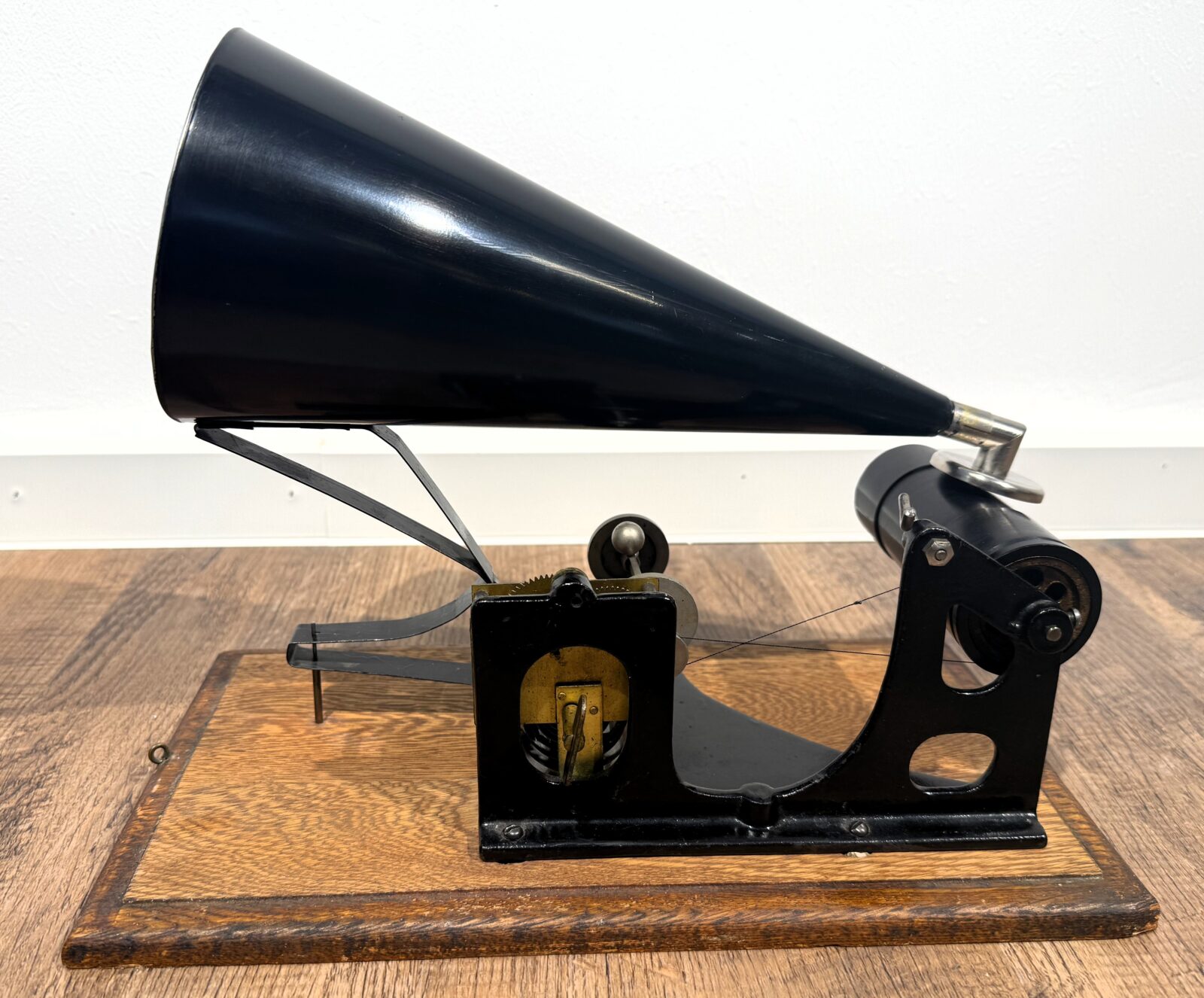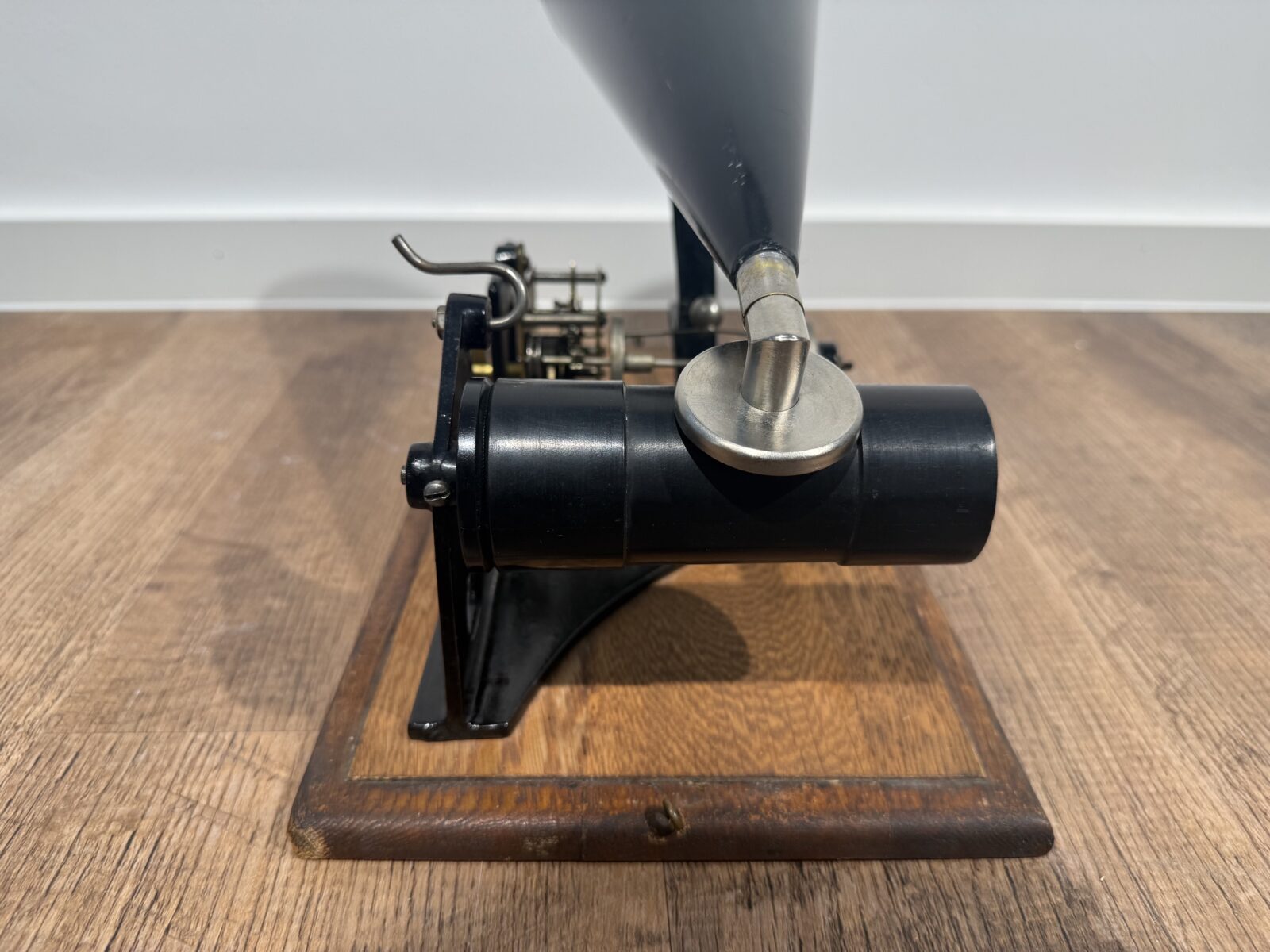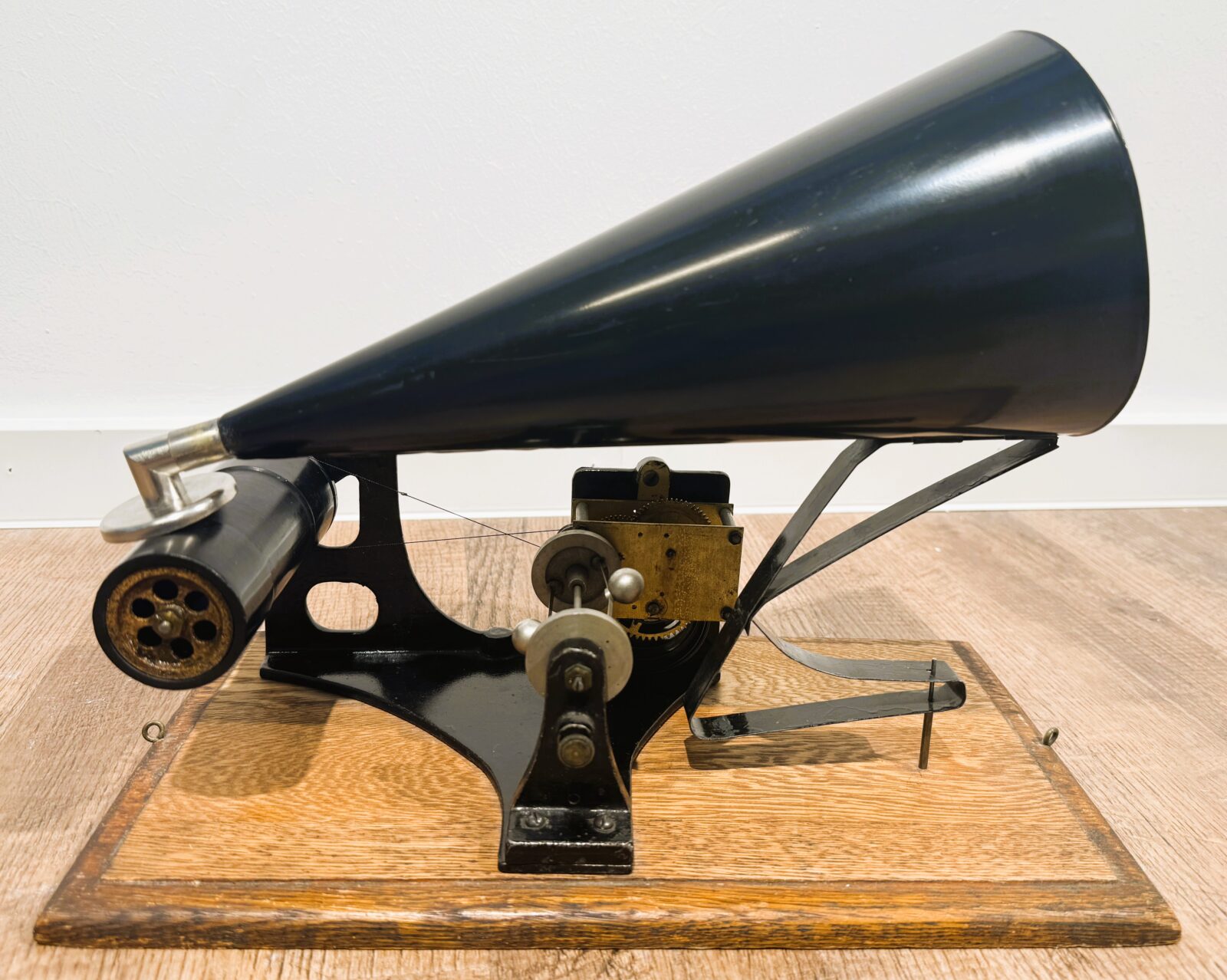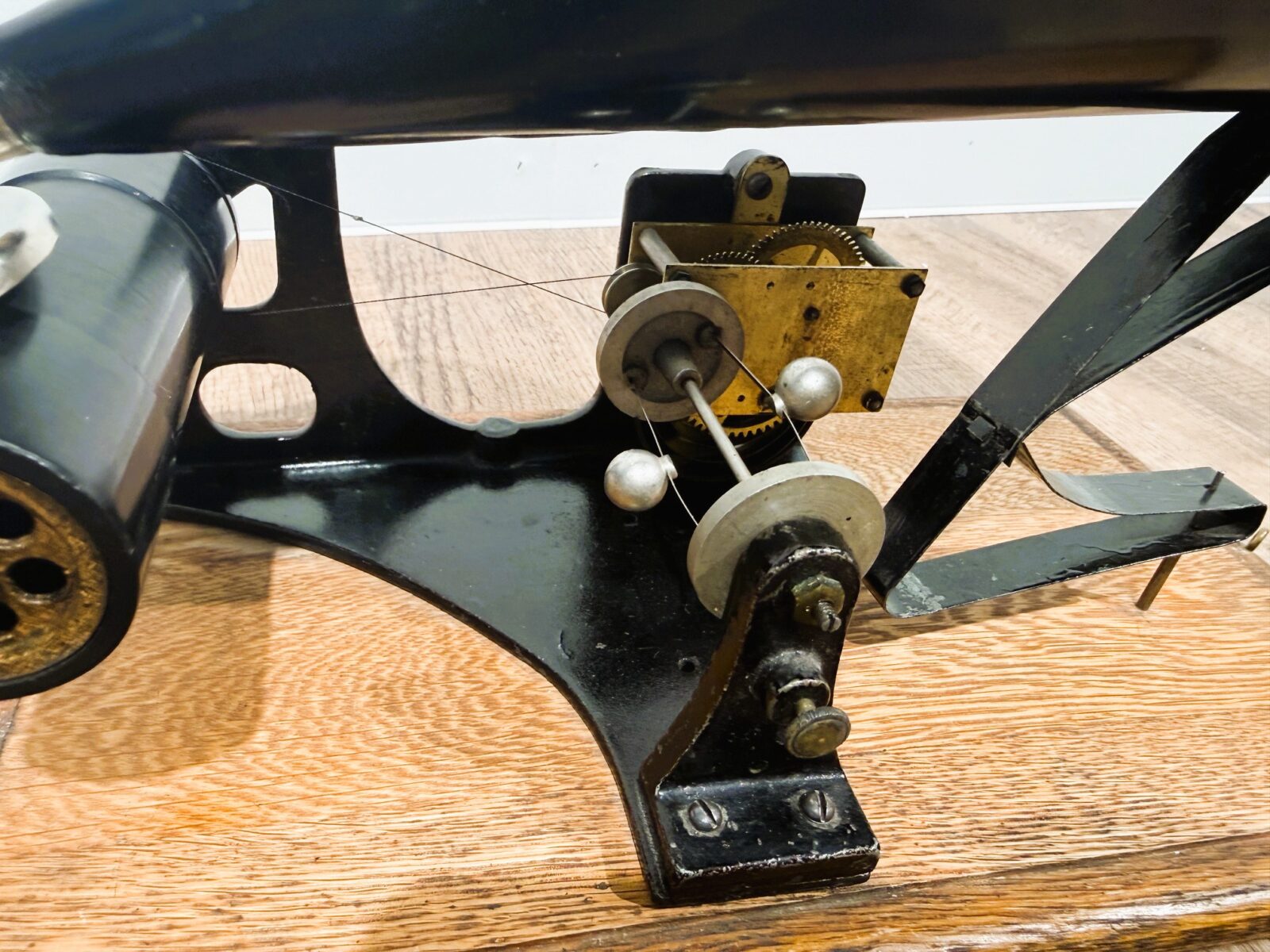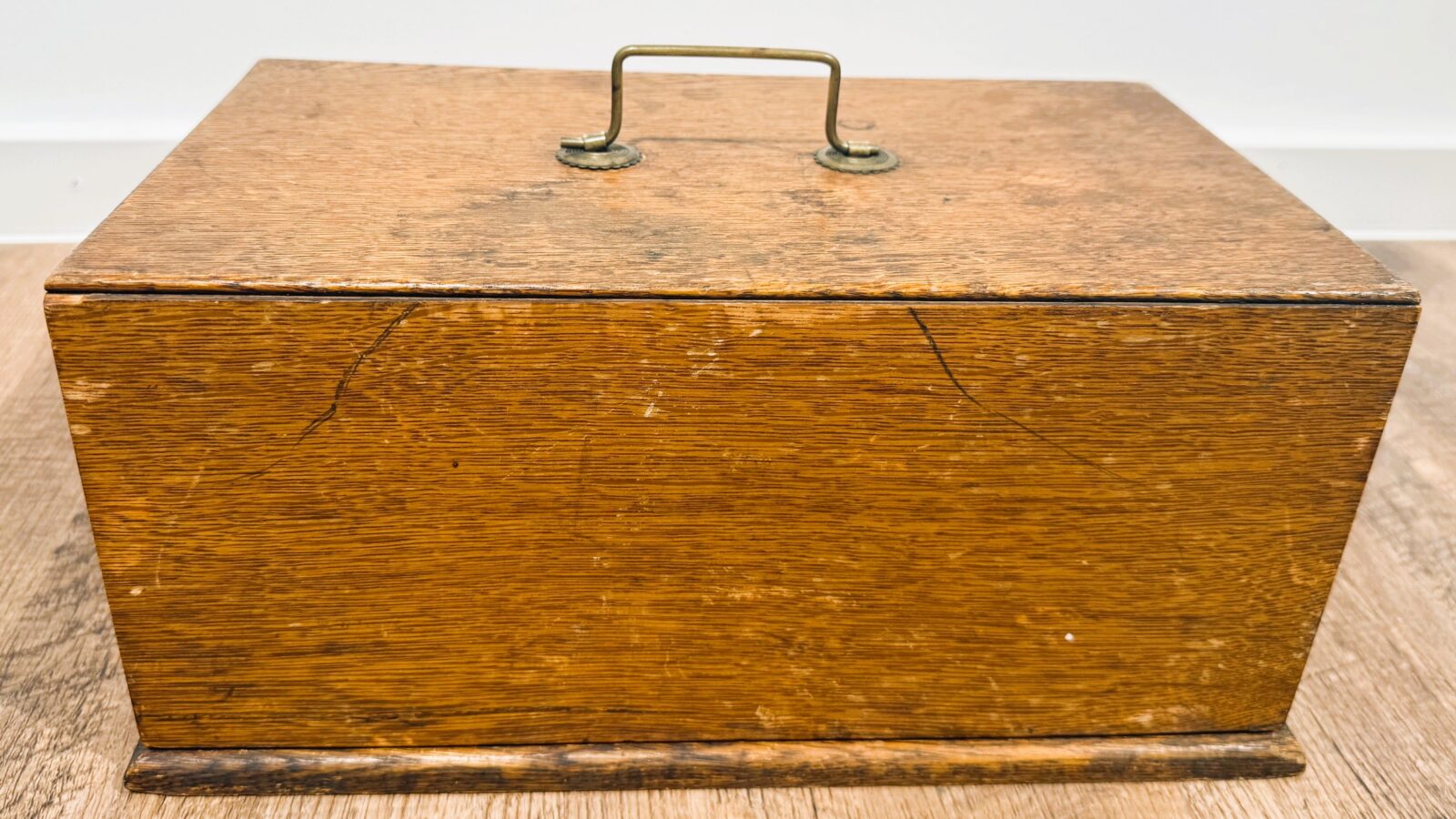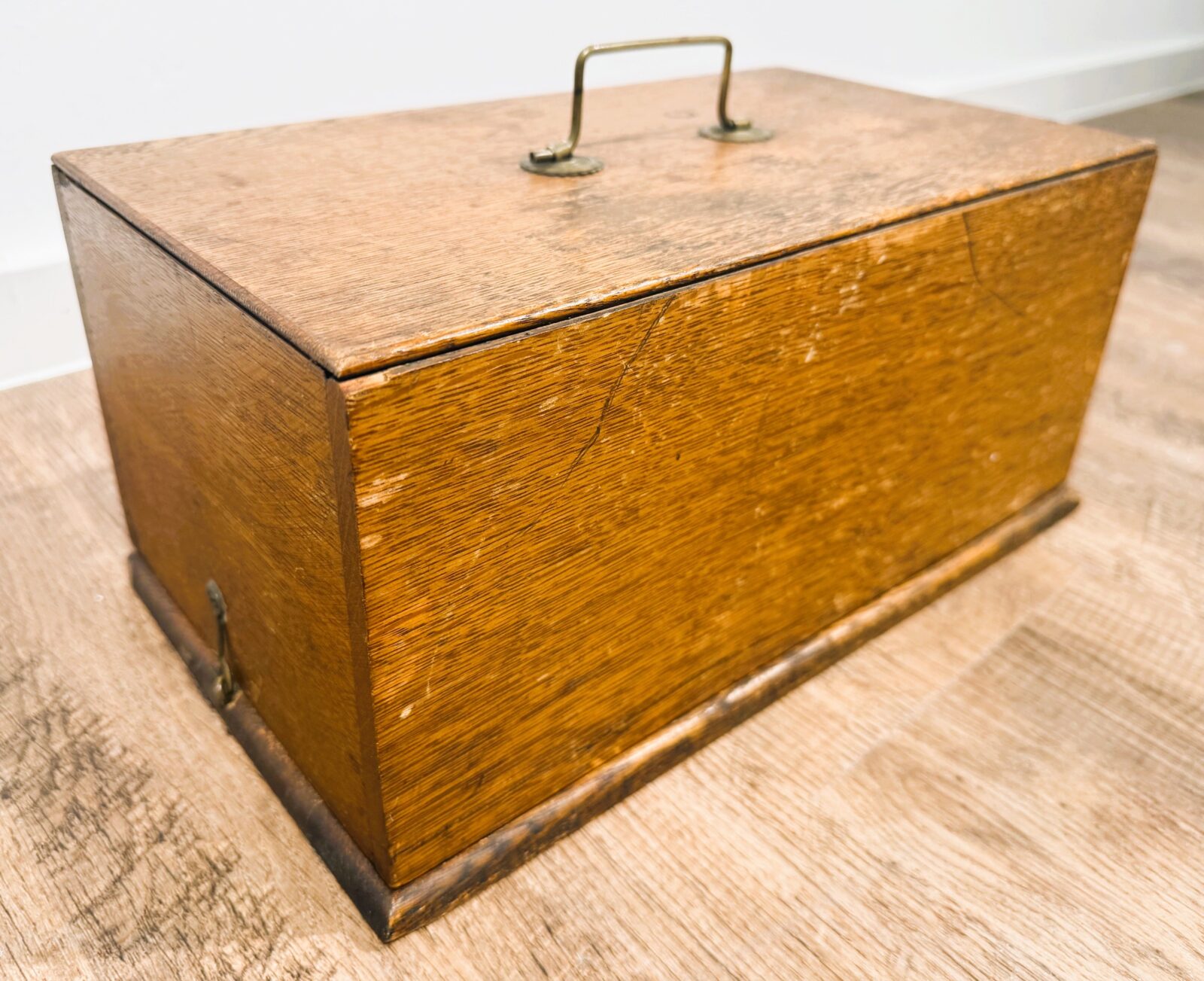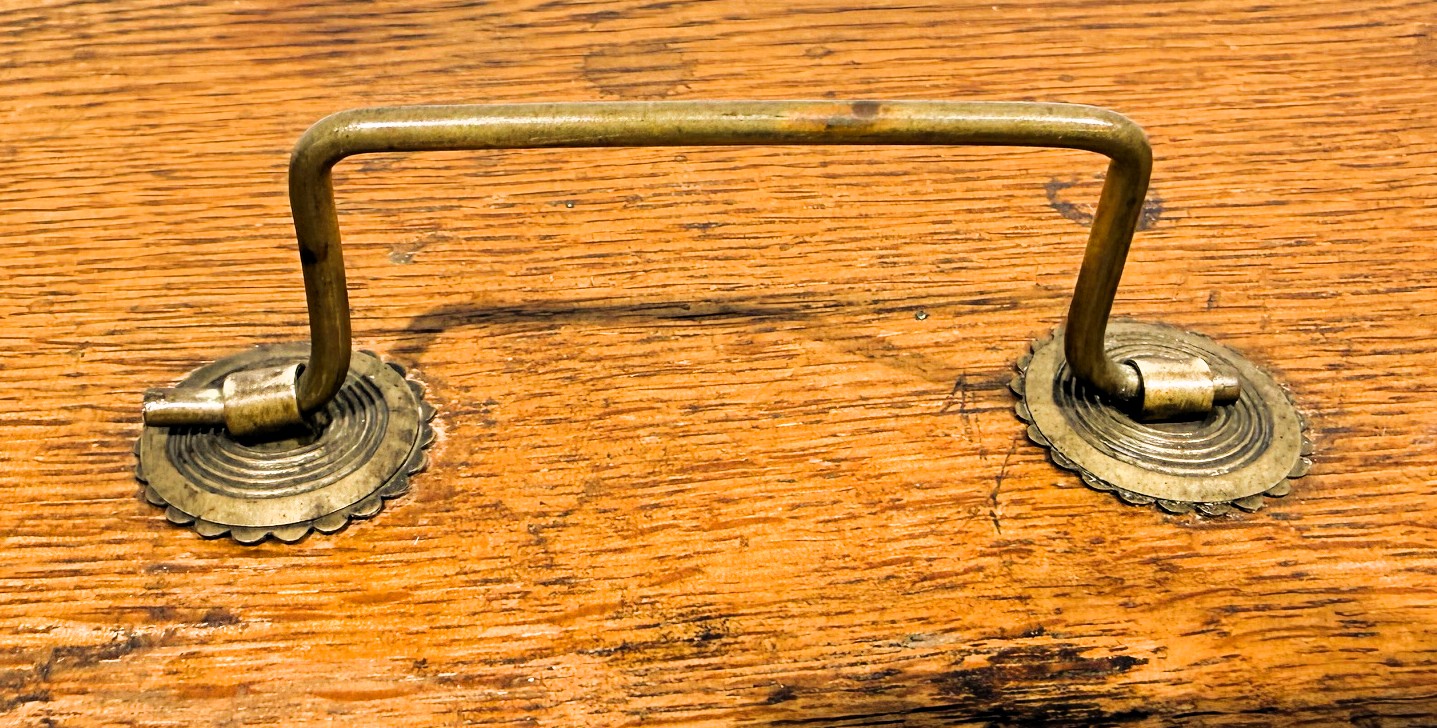

Echophone with Horn
Exhibit Number 374
USA, probably 1896/97
Rare transitional form between the Amet Echophone, the Lyraphone, and the later Puck principle
Object and Classification
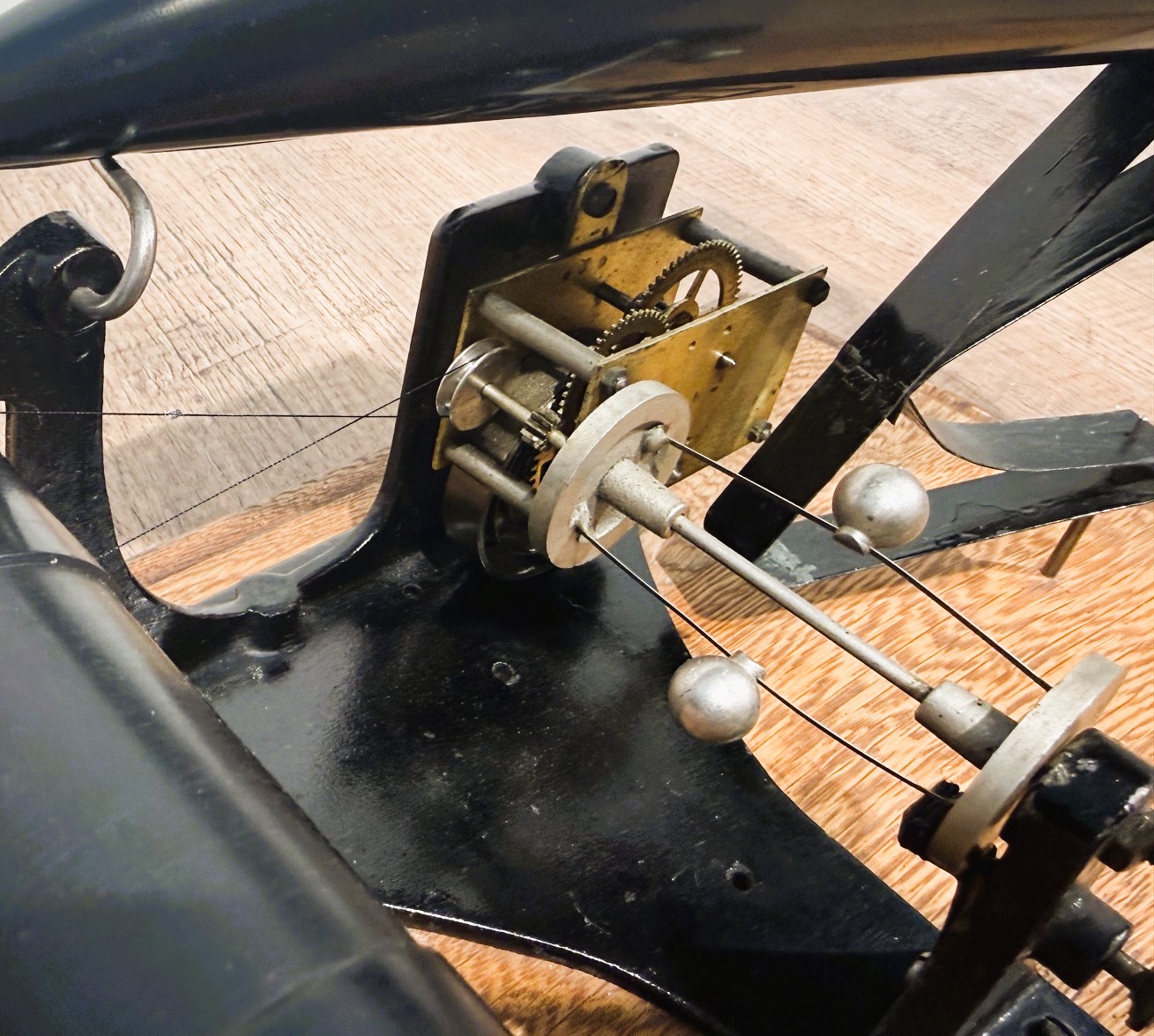
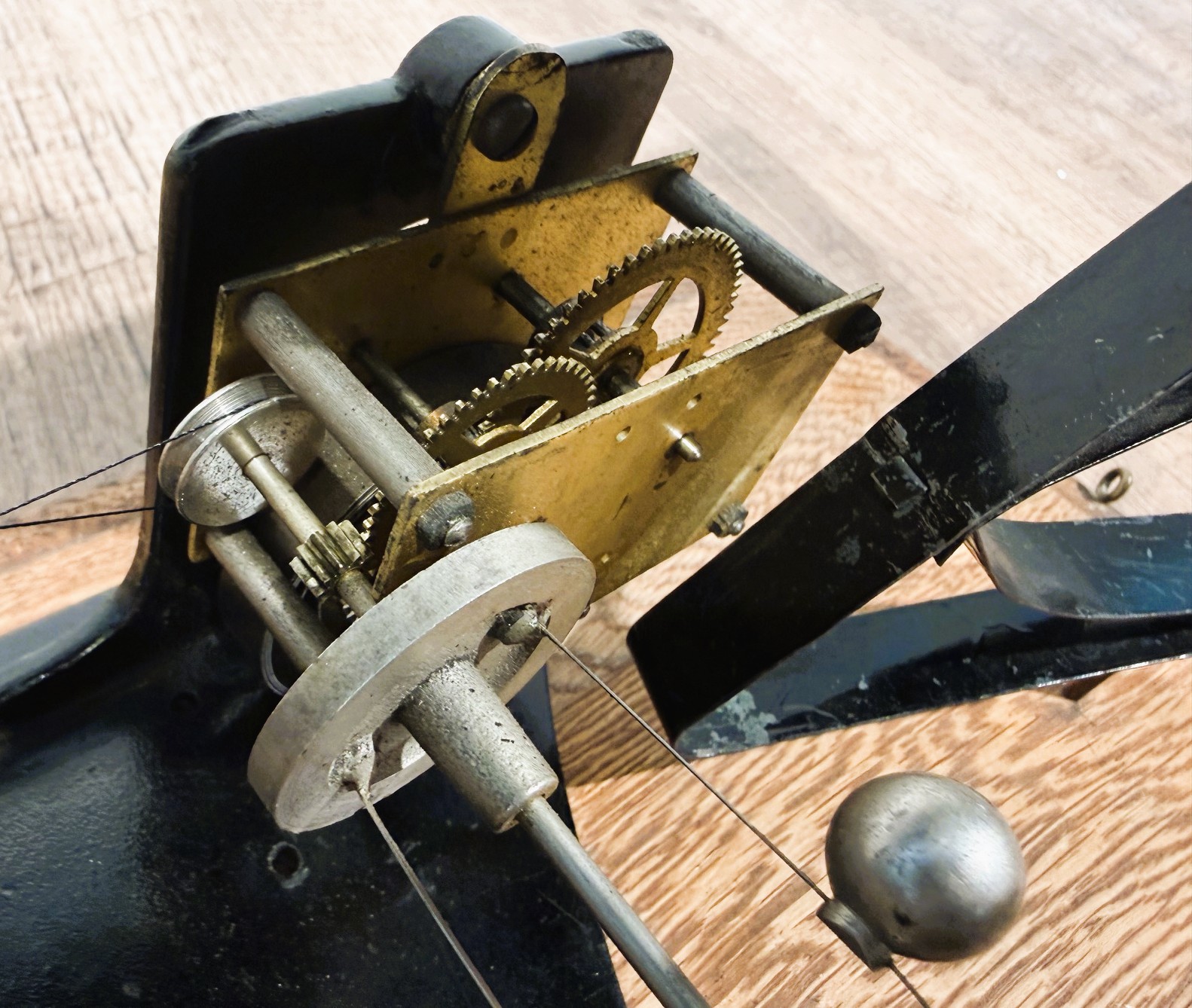
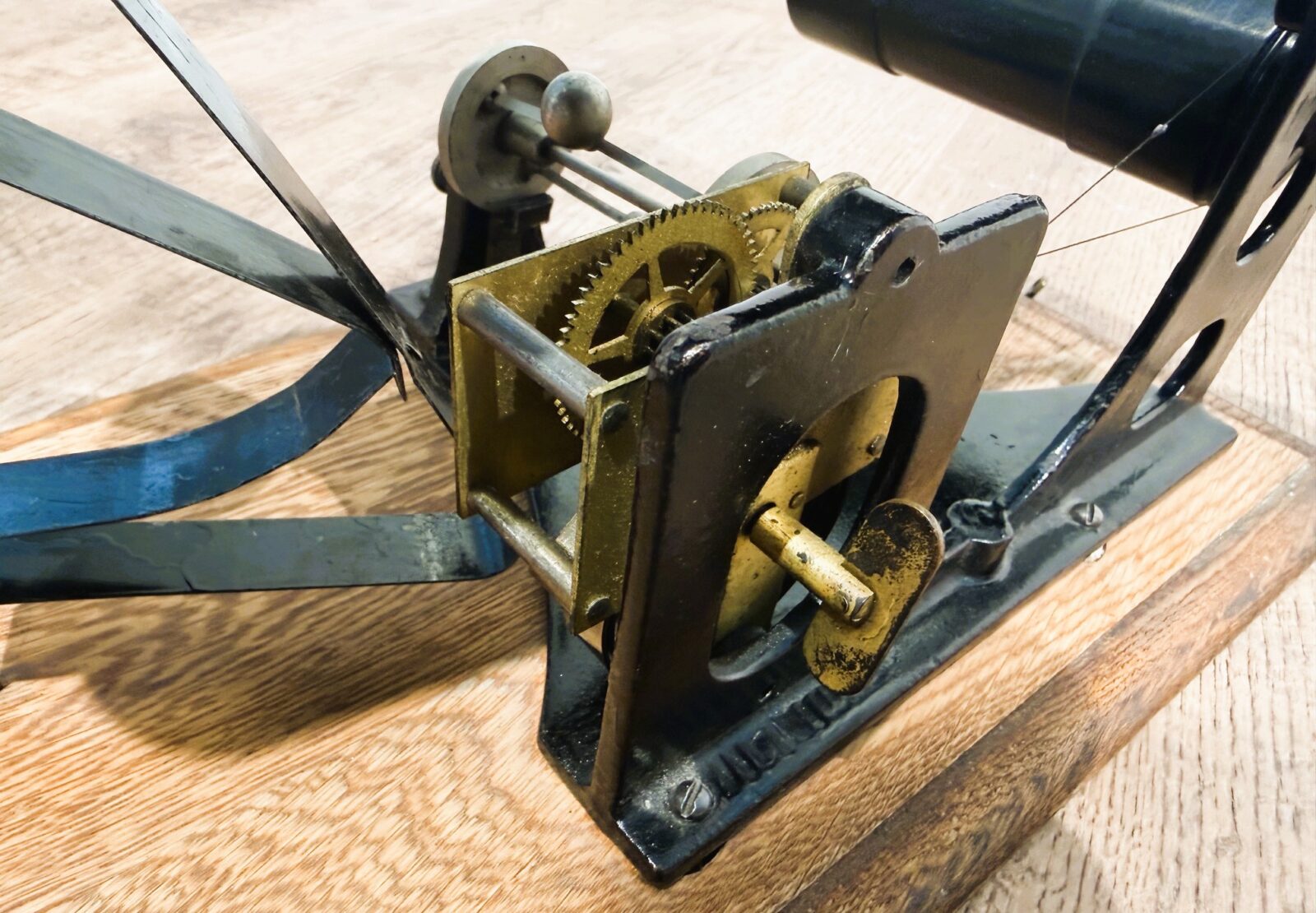
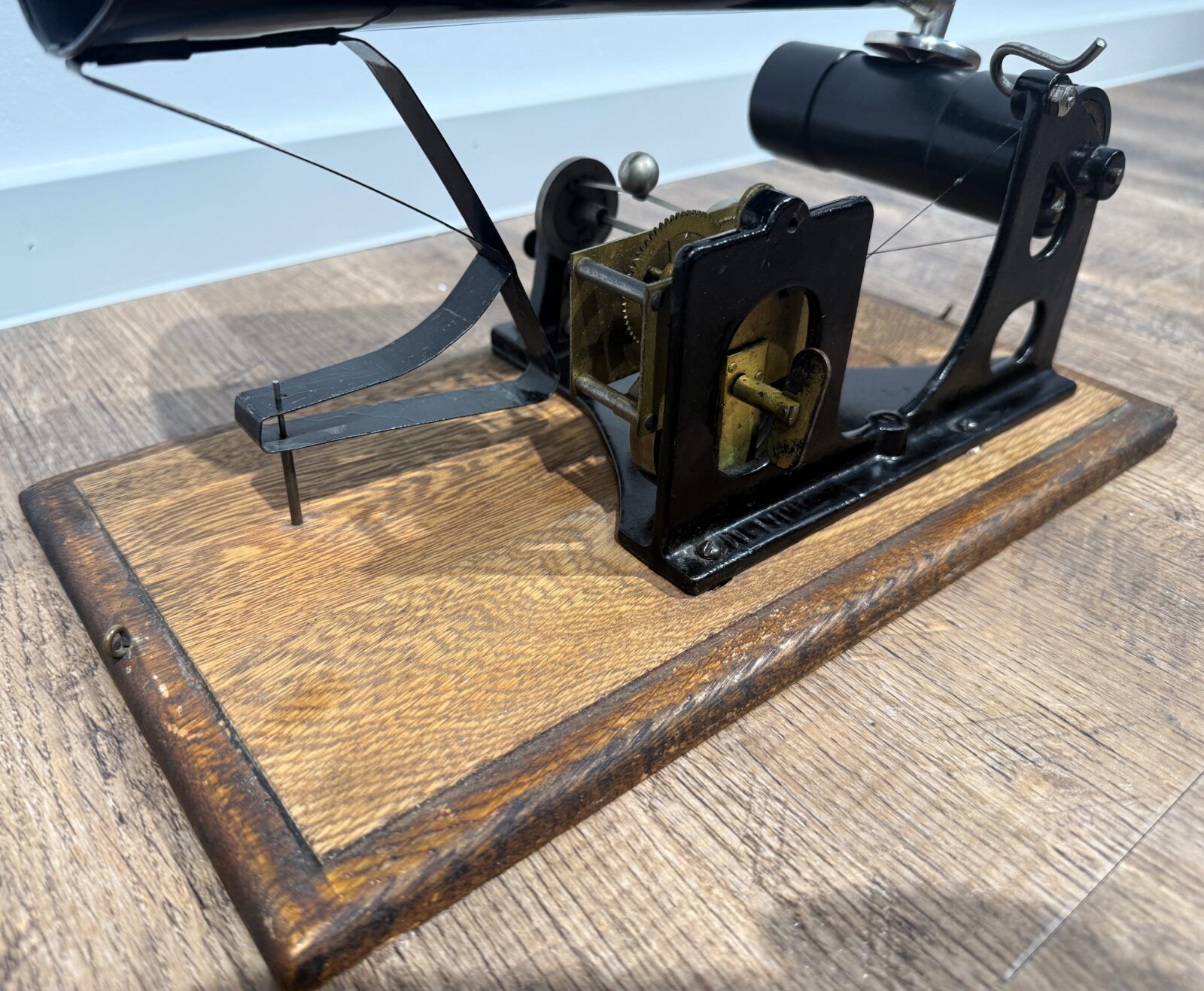
The horn-equipped Echophone exhibited here belongs to the most historically significant objects in the Edisonium. It is not an ordinary small phonograph, but very probably a key type from that scarcely documented transitional phase in which the later horn-equipped family and small phonographs developed out of the American Amet Echophone. Unlike the normal Echophone, this machine does not have the usual combination of glass tone arm, bellows, and listening tubes, but instead a reproducer with a pivoted horn. It is precisely this difference that makes it so exceptional.
The technical basis of the apparatus clearly points to the Amet line. According to the research of M. Shawn O’Rourke, the so-called “Undocumented Echophone” has a motor frame, motor, and gutta-percha mandrel that correspond exactly to the known Amet Echophone. Other constructional details of the case and arrangement also fit this type. The horn-equipped machine is therefore not merely “similar,” but essentially an Echophone in a new acoustic form.
Technical Background
Edward H. Amet was one of the early American developers of inexpensive spring-driven phonographs. His aim was to create a playback machine that was as simple in construction, as inexpensive, and as suitable for a wider market as possible. The first Amet machines, and the later devices sold under the name Metaphone and then Echophone, formed a counter-world to the heavier and more expensive machines of Edison and Columbia. The Echophone was a small apparatus with simplified mechanics, designed for individual listening through listening tubes.
Exhibit no. 374, however, shows that this line did not stop with the quiet listening-tube machine. Here the next decisive step was taken: the Amet basis was combined with an openly sounding horn. The result was a machine that already reveals all the essential characteristics of the later small family phonographs:
simple, open construction,
low material and manufacturing costs,
direct and louder sound reproduction,
a compact table-top machine instead of a heavy standard apparatus.
It is precisely in this combination that the extraordinary historical significance of the object lies.
The Evidence According to O’Rourke
The great importance of the object is further reinforced by O’Rourke’s investigation. He emphasizes that the horn-equipped Echophone described by him is not the singular conversion of a hobbyist or tinkerer. Rather, at least three actual examples of this type are known, one of which has lost its horn and reproducer, but is otherwise identical in all mechanical, dimensional, and external characteristics. The existence of an independent manufactured type is therefore highly probable.
O’Rourke offers three plausible interpretations:
1. Late Amet Development
The machine may represent Amet’s last known improvement to his Echophone — that is, an attempt to make his simple low-cost machine more attractive and more competitive by adding a horn. O’Rourke expressly points out that Amet repeatedly improved his machines and by no means gave up easily.
2. Possible Lyraphone
A second interpretation sees the horn-equipped Echophone as the Lyraphone, which was announced in The Phonoscope in May 1897. That machine was explicitly described there as “similar in construction to the Arnet Echophone” and was offered under the authority of the American Graphophone Company. O’Rourke notes that the illustration of the Lyraphone bears striking resemblance to the horn-equipped Echophone, although differences exist. No securely identified original Lyraphone, however, is yet known.
3. Production Machine Made from Echophone Stock
O’Rourke regards it as the most probable explanation that, after Amet’s defeat against the American Graphophone Company, remaining stocks of the Echophone passed into other hands and were reworked by an enterprising manufacturer into a new, more competitive horn machine. In this connection he mentions two important parallels:
the “Gem Echophone” of W. Hill & Co., advertised in 1898 in a horn-equipped form,
and the Euphonic Talking Machine of Anthony Loforte, which was apparently “based on Amet parts” or “built on the same plan as the Echophone.”
This third explanation is especially important for the Edisonium specimen because it understands the machine not as an isolated oddity, but as part of a line of production and development.
Significance for the History of the Puck
It is precisely from these findings that the special position of the machine in the history of the later Puck emerges. The horn-equipped Echophone is not simply a curious side model, but very probably a structural precursor of the later small horn phonographs. It anticipates that combination which later became decisive for the Puck world:
inexpensive and reduced mechanics,
self-guiding or simplified cylinder guidance,
immediate loud sound reproduction,
compact open form,
suitability as a small family phonograph.
In this sense, object 374 is not the first Puck in name, but very probably the first Puck in principle. In cautious scholarly terms, it may be said that the horn-equipped Echophone can, with good reason, be regarded as the original form of the later Puck principle.
The Költzow & Russ Machine as a German Counterpart
Of particular interest in this context is the advertisement documented by you for a “Familien-Phonograph” from Költzow & Russ. The illustration shows a simple, inexpensive, openly constructed horn phonograph which seems to occupy in the German market precisely the role that the horn-equipped Echophone played in the American transitional phase. If the observation is correct that the cast-metal and metal parts of this Költzow & Russ machine correspond to those of the Echophone, then an exceptionally strong historical thesis follows:
Not only the idea of the Echophone, but very probably also actual components, casting patterns, or semi-finished parts may have reached Germany and survived there in family phonographs of the Költzow circle.
This assumption fits extremely well with the reconstructed development:
Amet loses the patent case in 1896/97,
remaining stock becomes available or has to be disposed of,
horn-equipped Echophone variants appear,
German family phonographs of similar construction soon emerge,
the later Berlin Puck world develops in precisely this market segment.
Thus the Költzow & Russ machine may be understood as a German parallel or successor phenomenon of the horn-equipped Echophone — perhaps not identical, but very probably arising from the same material and constructive culture.
Why Object 374 Is So Important for the Edisonium
The importance of object 374 therefore lies not merely in its rarity, but in its key historical function.
1. It documents a lost developmental stage
Normal Echophones are known. Later Pucks are known as well. Between them, however, lies a technical phase that has scarcely survived materially anywhere. This machine makes precisely that missing intermediate stage visible.
2. It connects American and German development
The horn-equipped Echophone forms the bridge
from Amet and his low-cost line,
through the Lyraphone and similar transitional forms,
to the later German Puck world.
3. It is more than a variant
It is not merely a deviation from the standard model, but a first-rank research object because it makes an entire lost line of development tangible.
4. It compels a reassessment of Puck genealogy
If the technical and historical classification continues to gain support, the narrative of the early small phonographs shifts significantly:
Amet then appears as the technical point of origin,
the horn-equipped Echophone as the actual primary form,
Bettini as the patentee of a particular variant,
Bahre as the figure who successfully brought the line into serial production in Germany.
Concluding Assessment
With the horn-equipped Echophone, no. 374, the Edisonium in Mariazell possesses one of the most important known objects for reconstructing the early history of the small horn phonographs. The machine is very probably not merely a rare Amet derivative, but a central link between the classic Echophone and the later Puck world.
Should the material proximity to the early German family phonographs of the Költzow circle be further confirmed, the Edisonium specimen would additionally take on the importance of a transatlantic key object: as evidence that from the American Echophone line there was transmitted not only a technical principle, but possibly even actual components and casting forms into the development of the German Puck.
Thus object 374 is not merely a rare phonograph, but quite possibly one of the earliest surviving documents of the development from which the Puck emerged.